I make things in school, you can too
I gave a talk at EMF 2026 on my experiences of working in schools making art with young people, in an attempt to encourage other people to do the same.
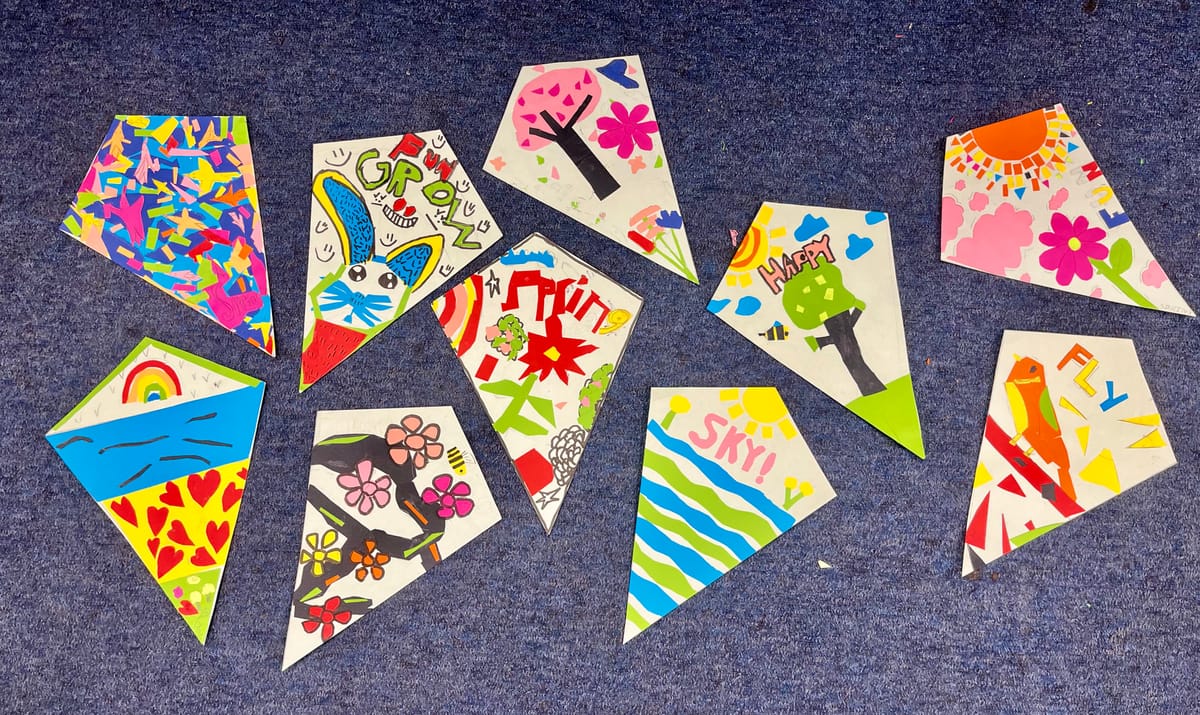
I gave a talk at EMF 2026 on my experiences of working in schools making art with young people, in an attempt to encourage other people to do the same. Here it is if you just want to watch it first (self-hosted as the CCC embed is really ugly). The first few moments are blank because I had no slides.
(Original video, along with all of the other EMF 2026 talks.)
[I'm the Art & Installations team lead at EMF. You may see that this talk happened in the Arts tent, a venue that I also ran. I'd like to note that this talk was accepted by the Talks team. I offered to host it in the Arts tent to make more time available on the main stages. Orga are discouraged from putting in talk proposals, but that ship clearly sailed this EMF – it turns out we are also people who want to talk about our interests.]
A thing I didn't discuss much in this talk is that I'm great with kids. I don't say this to boast, I'm as confused about it as anyone since I'm also autistic-spectrum and have never had any of my own. I say this because, if you are neurodiverse, it is possible that you are too and you don't realise it. Young people are still developing their social skills. They stare at people and ask awkward questions. They say inexplicable things and laugh at jokes that don't immediately appear to be funny. They are, in short, all a bit weird. But it's a weirdness that feels familiar.
If you're strongly aware of your own neurodiversity, then you're more able to tell when a child's behaviour steps slightly beyond this natural weirdness. If you can see which kids are struggling to fit in and make sense of the world, then maybe you can help them. I've talked honestly with lots of young people about being neurodiverse, and sometimes realising that you can be that and still be a functioning, successful person is what they really need to hear.
Lacking any real understanding of how you're supposed to talk to children, I started out by just talking to them like I would any other human being. I can report that this works fine. Some adults treat young people as if they are less intelligent but this is, of course, wrong. Kids have just as much brain power, but it is primarily focused on manipulating adults. When asked a question, they will invest significant mental effort in giving you the answer they think you're looking for, rather than an honest one. You have to earn their trust if you want to get beyond this.
Children can absolutely smell when you're not taking them seriously, but if you can convince them that you are, then everything changes. When I'm working in a primary school all day, I always order a school lunch. I stand in the same queue as the young people and I sit on the same small chairs, at the same low tables. To do anything else would be clearly rude. Once the kids realise that I'm not taking the piss, they will happily discuss their favourite colour of jelly, offer to pour me a mug of water and confidently show me where to put my dirty plate and cutlery.
Getting along with kids is easy. You just treat them with respect. That also means treating their work with respect. I look at it carefully and I tell them honestly what things interest me in it. Sometimes a child will make something silly to act up to their friends and be funny, and I will explain to them what I like about it and the ways in which I think the joke could be enhanced, then I come back later and they have produced something extraordinary.
I feel it is important to look after young people's artwork the same as I would my own. I ensure that it is displayed in a way that honours their intention, and that they are properly credited for it. The most furious I have been in a long time was when I displayed some class artwork and the venue carelessly damaged the pieces and just binned them.
The great thing about most of this advice, is that it applies equally to working with adults. Except that, in my experience, adults muck about more than young people. This is probably because adults are often less confident and more self-conscious than kids and so find it harder to make art. You just have to be patient.
Finally, despite years of listening to people's protestations to the contrary, I have never met anyone who can't draw.